

 edu-consultancy
  Wednesday 10, 2024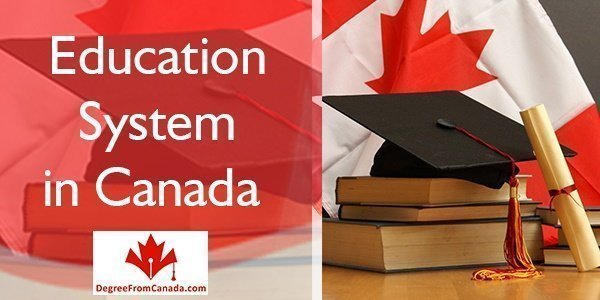
Although it varies from province to province, in general, Canadians must attend school until the age of 16, and it is comprised of four levels.
1. Pre-elementary
Pre-elementary or ‘kindergarten’ is the first stage of education in Canada and are offered to children between the ages of four to five before they start elementary school. In New Brunswick and Nova Scotia, this is mandatory, while everywhere else it is optional.
They are offered by either public, private or federal schools, depending on where you choose to send your child. In most areas, the first year of pre-elementary school is public and free, while certain provinces offer additional years free of charge, such as Quebec that offers free kindergarten for those from low-income families or for children with disabilities.
The teaching curriculum taught in pre-elementary in Canada is relaxed, and is a chance for young students to learn the alphabet, basic skills such as counting, pre-reading, music, art, and how to play with others. These programs are specially designed to prepare children for their next step: primary school!
2. Primary
Primary education or elementary school is Canada is mandatory for children, starting in grade 1, generally at the ages of 6 or 7, and goes until grade 6 at the ages of 11 to 12 years old.
In Canada, students at this stage of education tend to have only one teacher that teaches them all subjects in the same classroom, with the same students. Special education classes are also available.
The pre-elementary curriculum covers subjects such as reading, math, English language (French in Quebec), history, science, music, social studies, physical education, and art. The difficulty of the courses increases as students advance in grades.
3. Secondary
Secondary education in Canada has two levels: junior high school and high school. Junior high school or intermediate education follows immediately after completion of elementary school. It’s a two-year stage of education that includes grades 7 and 8.
These two years give students the chance to adjust to the changes of switching classrooms and teachers throughout the day. The goal of this stage is to help students best prepare for their next step of education, with the difficulty of courses expected to increase greatly.
High school is the last part of secondary education that comes when students reach grade 8, and they stay in this stage for 4 years, until grade 11 or 12 (ages 16-18, depending on the student’s circumstances and province).
Students are required by law to stay in school until the age of 16, regardless of what grade they are in when they reach that age.
In Ontario and New Brunswick, the law is that students must stay in school until 18 or until they have successfully earned a high school diploma. In Quebec, secondary education ends in grade 11, which is generally followed by a two-year pre-university program known as Cegep.
Canadian high schools have carefully and thoughtfully designed their curriculum in order to best prepare students for higher education. Some provinces even offer job training at the high school level.
4. Post-Secondary Education
College and University
Upon graduating from high school, Canadian students are given the opportunity to apply to colleges and universities. College in Canada generally refers to a smaller community college or a specific trade school. Many students in Canada will attend college to further prepare themselves for university and obtain credits that can be transferred over.
University in Canada is a place for higher education where academic degrees can be obtained in a wide variety of subjects in a similar structure to that of the United States, starting with a bachelor’s degree, then a master’s degree, and finally a PhD as the highest level of education.
For public universities and colleges, they are mostly funded by provincial governments and the remainder is paid by minimal tuition fees, as well as research grants and partially from the federal government too.
Other Types Of Education in Canada
1. Vocational Schools
On top of community colleges offering a vocational training, students are also given the opportunity to learn a trade or vocation at technical schools that are spread out throughout Canada. Years ago, such programs did not require students to hold a high school diploma, but things have changed greatly in recent years.
Vocational schools allow Canadian students to learn the specific trade they are interested in and gain real life experience under a professional and qualified supervisor.
2. Private Schools
Private schools are also available in Canada, which means that they are schools that are not funded by the government, and often come with hefty price tags. This is the choice of the parent and student to decide whether or not this is a worthwhile investment for them to make.
Some parents feel as though their children need smaller classes, more special attention, or would like to send them to a specific school for personal reasons. In Quebec, those that do not wish to study in French and can afford it will often opt for a private school.
3. Religious Schools
Those that wish to send their children to religious schools in Canada must send them to private institutions for the most part, other than certain Catholic schools. These schools teach both the regular school curriculum as well as religious teachings associated with the specific religion of the school.
Age of Compulsory Education
The age of compulsory education varies from province to province in Canada. The youngest is five years old and goes up to seven years old (Manitoba) to legally have to attend school.
16 is generally the last year where students have to stay in school by law, however certain provinces require Canadian students to stay in school until the age of 18, such as Nova Scotia, New Brunswick, and Manitoba.
Which Provinces Differ from the Standard System?
While in most Canadian provinces, the system is rather standard, Quebec does things slightly differently.
Rather than staying in high school until grade 12 like most places, students graduate high school in grade 11, and then continue on their studies at another higher institution known as Cegep. This 2-year program is intended to offer students a chance to test the waters when it comes to career choices, and have an easier transition into university.
What Languages are Classes Taught in Canada?
The two official languages of Canada are English and French. International students are given the choice to decide to study in either language, and many schools in Canada offer studies in both languages.
In most of Canada, English is the main language of school-level education, although French is seen heavily throughout. In the province of Quebec, however, students are required to attend school fully in French until they complete their high school studies, and only under certain special circumstances may a Canadian student study in English, for example those that are in Quebec for a temporary period of time.
In general, newcomers and immigrants to Quebec have to attend school in French and are only given the chance to study in English by attending a private school.
Migrant students
Canada has a large amount of migrants in its schools, with more than a third of young adults in Canada coming from immigrant families. And it’s been found that new immigrants tend to quickly integrate themselves and be just as successful as their native counterparts. Some believe that this incredible success is due to the equality and fairness for migrant students that is seen throughout schools in Canada.
Equal Opportunities
By giving all students equal opportunities to education, and treating everyone the same, Canada has proved to have little differences between its students — whether they come from more well-off local families or from minorities and immigrants that have more disadvantages.
While some people believe that high levels of immigration can potentially affect the success of students, when it comes to Canada, according to Prof Jerrim, immigrants may very well be key to its success. ‘‘These families have an immigrant ‘hunger’ to succeed, and their high expectations are likely to boost school results for their children’,” Jerrim explains.
Is Education in Canada Free?
Although there is not one single education system in Canada, basic public education is in fact free for residents of Canada until the 11th or 12th grade, depending on the province. International students, however, do have to pay the full fees.
Many colleges and universities are heavily subsidized, allowing students of all backgrounds an equal chance at higher education. The Canadian government is working on taking this even further and opening up more opportunities to young hopefuls to attend university.
Health Care and Education in Canada
Unlike the U.S., Canada has a publicly funded health insurance system, financed through taxpayer money. Each province has a different plan and specific regulations, but for the most part, it ensures basic medical care for all Canadian citizens. Additional health procedures outside of the ordinary are paid by the patient themselves, while sometimes their employer will cover these costs.
Not only does Canada take care of its citizens when it comes to healthcare, but they also offer daycare and nurseries for those in need as well as endless public schools, free of charge.
Conclusion
The rest of the world could learn a thing or two from Canada’s top-notch education system and how they treat everyone equally, taking care of all of their citizens and ensuring that everyone gets the education that they deserve. Canada’s impressive success rate didn’t come from nowhere! Check out our Payment Refund Policy.